-By Rishiram Paudel
For years, mandarin growers of Kathekhola-06, Bihukot, lived with a harsh and discouraging reality. Orchards that once produced bright, juicy mandarins were increasingly devastated by the Chinese citrus fruit fly (Bactrocera minax). Losses were severe, farmers routinely lost 30-50 percent of their fruits even before ripening. Orchard floors were covered with fallen mandarins, and many growers began to believe the pest was uncontrollable.
“We thought our mandarin farming was coming to an end”, one farmer recalled.
The turning point came when the problem was formally identified and a focused pilot initiative was launched to test a practical and effective solution: protein bait spraying to suppress the population of the Chinese citrus fruit fly.
This effort brought together lead mandarin growers, technical agriculture staff from Kathekhola Rural Municipality, the team from Bihukot Smallholder Farmer Agricultural Cooperative Limited, and technical experts. The initiative began with off-field orientation sessions, where farmers learned about the fruit fly’s life cycle, the reasons behind the heavy fruit drop, and how protein bait works, specifically targeting female fruit flies before they lay eggs.
These sessions were followed by hands-on field demonstrations in key citrus-growing areas including Kimbot, Chirpani, Dharamdas, Inarpani, and Taapu. Farmers were trained on the correct timing, location, and method of spraying, ensuring the practice could be adopted confidently and correctly. With farmers fully mobilized, the campaign was implemented on a scale. Over 6,500 mandarin trees in Kathekhola-06 were treated with protein bait across eight spray cycles over a three-month period, at intervals of 8-10 days. The coordinated and repeated application created a strong suppression effect on the fruit fly population, and farmer confidence grew with each passing cycle.
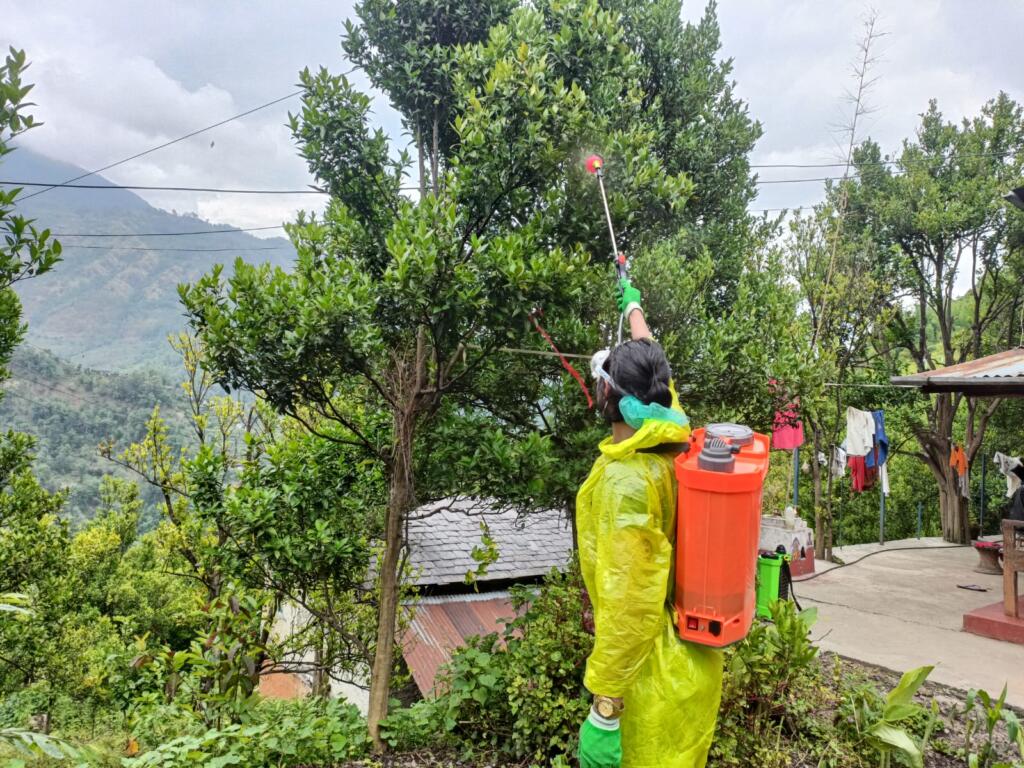
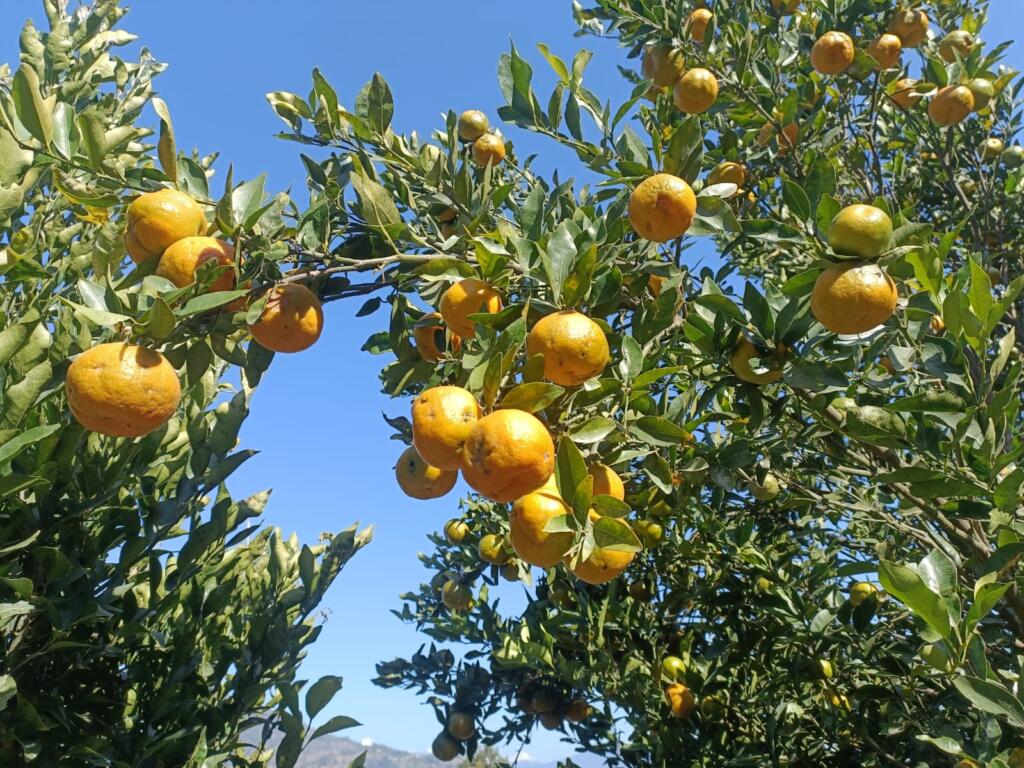
The results exceeded expectations. By the end of the season, fruit drop caused by the Chinese citrus fruit fly had fallen dramatically. Where farmers once found piles of fallen fruits beneath each tree, they now observed only four or five dropped mandarins out of every hundred.
“Earlier there would be piles of fallen fruits under every tree, but now only four or five out of a hundred falls. We have never seen results like this”, shared a farmer from Kimbot.
Another grower simply said, “Protein bait has given life back to our mandarin orchards.”
Women farmers also highlighted an important change. No longer did they spend hours every few days collecting fallen fruit. Instead, they could focus on preparing for a healthy harvest, one they felt proud of.
The success of the protein bait campaign did more than reduce fruit loss; it revived the confidence of an entire farming community. Farmers are now committed to continuing the practice and are actively encouraging others to adopt it. The cooperative has begun receiving requests from neighboring villages for demonstrations, signaling strong potential for wider replication.
What started as a small, targeted intervention has become a powerful example of how science-based, farmer-friendly solutions can protect livelihoods and restore hope. The experience in Kathekhola shows that even the most severe agricultural challenges can be overcome when knowledge, coordination, and community commitment come together. Today, Kathekhola’s mandarin orchards are thriving once again and so are the farmers who depend on them.