
– By Dolma Ghale
In the quiet, peaceful outskirts of Purbakhola, Palpa, Chup Chap farm prospers, quietly, just as its name suggests. The farm, run by the Hiski family, is not just a place where vegetables grow and goats roam. It’s a symbol of perseverance, hope, and the unbreakable bond of family. The family consists of Khumi Devi Hiski, her husband Khem Bahadur Hiski, and their children: daughters Chandramaya, Sangeeta, and Hema, along with their younger son Bishnu. The name “Chup Chap” meaning quietly or secretly, reflects the serene surroundings that have shaped the lives of this resilient family.
The name of the farm holds a special place in the Hiski family’s hearts. It is inspired by their three children; Chandramaya, Sangeeta, and their brother who face the daily challenges of being unable to hear and speak. Despite this, the family works together to make the farm a thriving source of livelihood, showing that communication doesn’t always have to be verbal to be meaningful.
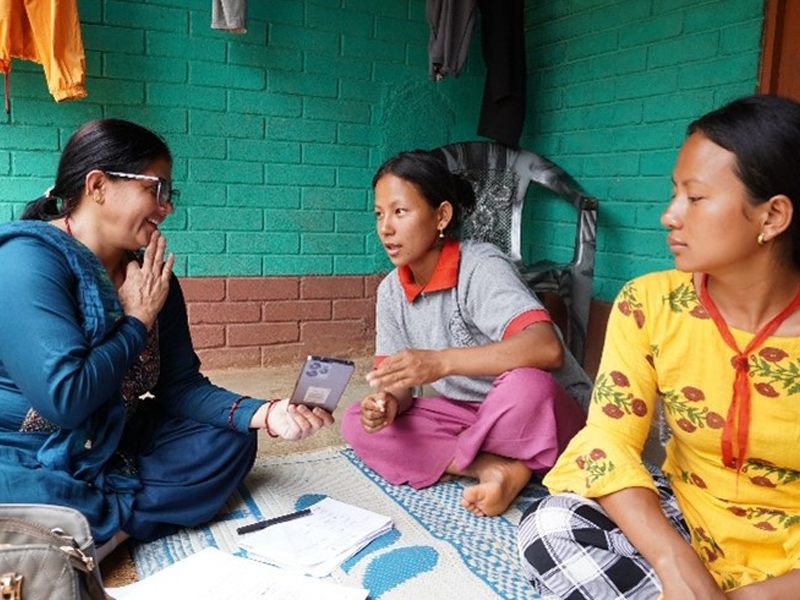
Hiski Family’s Journey to Farming and Heifer’s Intervention
Khem Bahadur’s journey to farming wasn’t an easy one. He once left Nepal in search of better opportunities, hoping to find success in Qatar. But the harsh conditions there, coupled with low wages, took a toll on him. After struggling to make ends meet and feeling lost in debt, Khem decided to return to his village, determined to make a better life for his family. He started vegetable farming, but the road to stability was anything but smooth.
That’s when Heifer entered their lives offering 10 goats and better-quality seeds, helping them begin a new chapter in their farming journey. The beginning was tough; sales were slow, and the goats were only bought during special occasions. But, with time, the Hiski family developed a loyal customer base, and their farm slowly grew into a steady source of income. Their annual income from selling goats and vegetables is around NPR 3.5-5 lakhs (USD 2575- 3678), with each goat selling for about NPR 16,000 to 20,000 (USD 118-148). In 2021 A.D. (2078 B.S.), Khem became a Community Agro-Vet Entrepreneur (CAVE) with Heifer’s guidance. Now, he supports around 300-400 local households, providing them with animal food and medicines, and passing on the knowledge that helped transform his own life.
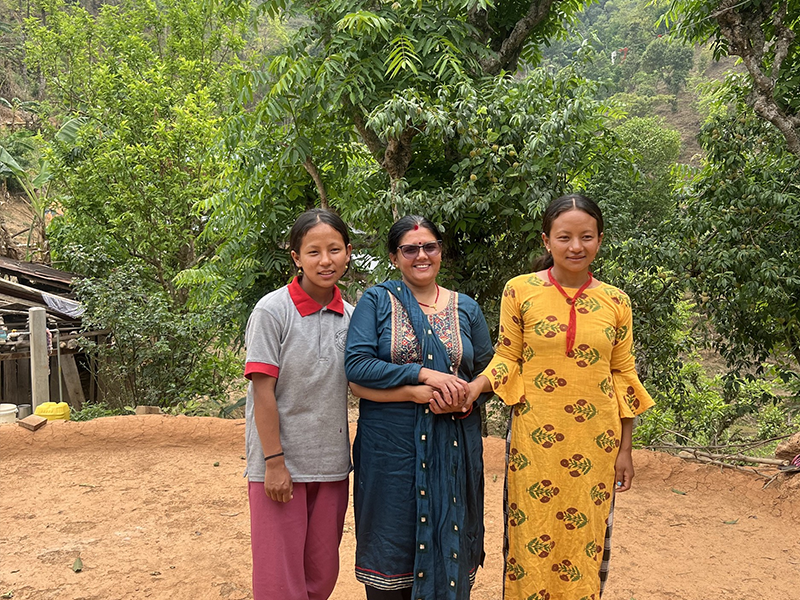
Challenges Along the Way
The Hiski family has faced significant challenges, including communication barriers stemming from their lack of knowledge of sign language. This has made public life in Palpa difficult for Sangeeta and Chandramaya who often feel disconnected from their community and even their family members. It’s a painful gap that leaves them isolated in public spaces, where their attempts to communicate are often misunderstood.
Sangeeta’s dream of moving to Kathmandu stems from a sense of frustration with limited opportunities in Palpa. She wants to pursue higher education; learn sign language, English, Science, and other subjects and build a future where she can stand on her own two feet. She often feels the weight of her financial dependence on her family, which leads to arguments and only fuels her desire to leave. Yet, she dreams of coming back one day, having achieved success, to help her parents live a better life. Chandramaya, though she doesn’t share the same ambition to leave, understands the struggles of her sister.
Despite their best efforts, the family has struggled to access education and resources for their daughters, with financial constraints further compounding their hardships.
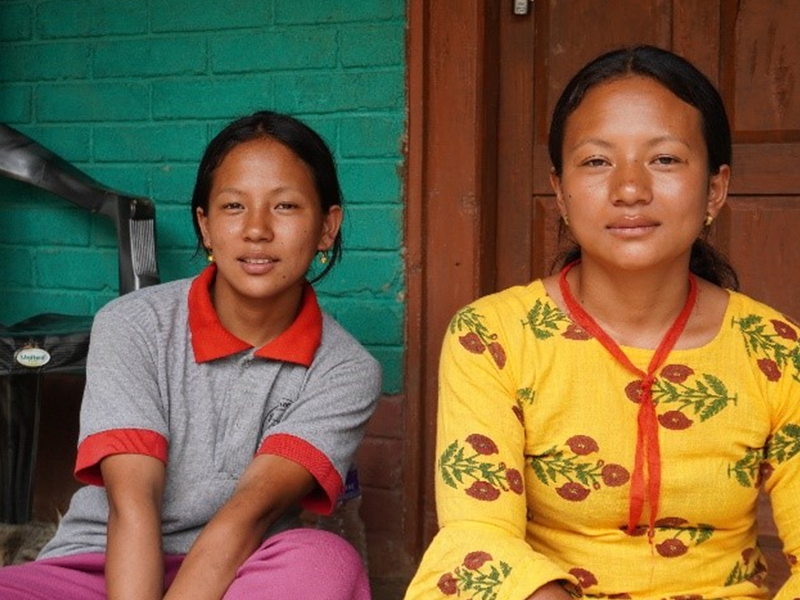
The Sisters: Dreams and Aspirations
Chandramaya and Sangeeta, though united by blood and farm life, are two very different souls with distinct dreams. Sangeeta, full of ambition and curiosity, longs for something more than what Palpa can offer. Her dreams are big; she wants to move to Kathmandu, pursue higher education, and immerse herself in a world of opportunities. Despite the challenges, Sangeeta’s hunger for knowledge and independence is unrelenting. She hopes to break free from the financial constraints that bind her to her family and create a future where she can support them in return.
Chandramaya, on the other hand, is content with her life in the village. She finds peace in the simplicity of farm life and has a deep, almost spiritual connection to the goats she cares for. Though she can’t communicate with them through words, she speaks to them through gentle claps, forming a bond that goes beyond language. Her heart is calm, and her contentment is a reminder that happiness isn’t always found in big dreams but in appreciating the small, everyday moments that make life meaningful.
Future Aspirations:
As Khem looks ahead, he dreams of turning Chup Chap Farm into a commercial success. He also wants to empower other farmers, showing them that with hard work, patience, and the right support, they too can build a better life for themselves. He often tells the youth not to follow the crowd and migrate abroad blindly, but to put in the effort and find success right where they are.
For Sangeeta, the future holds possibilities; education, independence, and the chance to create something greater than what she knows now. She is determined to leave Palpa, but her longing for a better life isn’t just for herself. It’s for her parents too. She dreams of supporting them, of giving them a life where they don’t have to struggle financially. And in her heart, there’s always a sense of hope that one day, she’ll return and help her family in ways they never thought possible.
Chandramaya’s future, however, is tied to the land. She dreams of continuing to help her family with the farm, nurturing it to success, and finding peace in the simplicity of rural life. Her calm presence on the farm is a reminder that happiness is found in gratitude and acceptance, even when the world around us seems to be moving at a faster pace.
Final Thoughts:
Chup Chap Farm isn’t just a farm, it’s a symbol of resilience, dreams, and the strength of family. Despite the communication barriers, financial struggles, and differing dreams, the Hiski family remains united in their commitment to each other and their future. Sangeeta’s big dreams of higher education and a better life show us the power of ambition, while Chandramaya’s quiet gratitude reminds us that contentment is just as valuable. Together, they embody the spirit of perseverance, showing us that no matter where we are or what we face, we all have the power to shape our own destiny.
