
– By Krishna Dev Joshi
Floodplains in Nepal play a critical ecological and economic role. However, they remain highly vulnerable to the impacts of climate change. The Building Agroforestry Based Adaptation Plans for Resilient Floodplains (BAGAR) project is a forward-looking initiative designed to enhance climate resilience across two geographically and ecologically distinct municipalities: Gadhimai Municipality in Rautahat and Marin Rural Municipality in Sindhuli.
Marin, located in the mid-hills of the Chure range, is particularly susceptible to flash flooding and sediment deposition due to its steep slopes and narrow floodplains. In contrast, Gadhimai, situated in the low-lying Terai plains, regularly experiences prolonged and severe flooding during the monsoon season, compounded by poor drainage.
Communities in both municipalities rely heavily on agriculture and livestock for their livelihoods. These communities continually face risks such as sedimentation of cultivable land, erosion, and reduced agricultural productivity, all of which threaten food security and economic stability.
A Vision Anchored in Collaboration
BAGAR introduces an innovative ecosystem-based adaptation (EbA) strategy that merges scientific research with traditional knowledge and community engagement. Through ecological restoration and sustainable floodplain management, the project addresses recurring flooding and its cascading impacts.
Designed as a collaborative effort, BAGAR brings together local government, community-based organizations, and civil society groups to create sustainable, community-led solutions.
Key Objectives
- Regulate floodwaters and reduce climate-induced flood risks
- Promote sustainable food and fodder production through agroforestry systems
- Empower women and vulnerable groups with targeted support
- Restore biodiversity and ecosystem health in degraded floodplain zones
Laying the Foundation (December 2024 – May 2025)
The initial phase of BAGAR has focused on implementing foundational activities to foster multi-stakeholder alignment and create readiness for long-term adaptation efforts.
Inception Meetings for Collaboration
In February 2025, inception meetings were successfully conducted in both Gadhimai and Marin. These gatherings convened representatives from municipal governments, ward offices, community-based and civil society organizations, and other local stakeholders. Participants validated the project’s scope and developed frameworks for coordination during implementation. The sessions revealed strong stakeholder support and generated calls for the pilot implementation of EbA activities, with recommendations to extend the project beyond its initial phase.
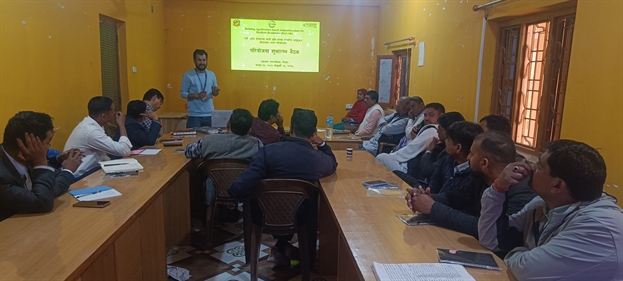
A cornerstone of the BAGAR project has been the formation of inclusive Ecosystem-Based Adaptation (EbA) Forums, designed to institutionalize community-led adaptation planning. As of May 2025, a total of 16 ward-level EbA Forums have been established—9 in Gadhimai Municipality and 7 in Marin Rural Municipality—with a combined membership of 240 individuals. In addition, 2 municipal-level EbA Forums (one in each municipality) have been launched, engaging 40 members in total.
These forums are intentionally designed to be inclusive and participatory. Membership includes a diverse cross-section of stakeholders:
- Municipal and ward-level officials
- Representatives from community forest user groups
- Agriculture and water user groups
- Disaster risk management committees
- Agriculture cooperatives
- Eco-clubs and youth networks
Key inclusivity milestones include:
- 33.6% representation from women
- 61.4% representation from vulnerable or marginalized populations.
This inclusive structure ensures that decisions related to climate resilience and floodplain management reflect the needs and voices of the most affected communities. The forums serve as platforms for dialogue, planning, and action—laying a strong foundation for sustained, equitable, and climate-smart interventions.
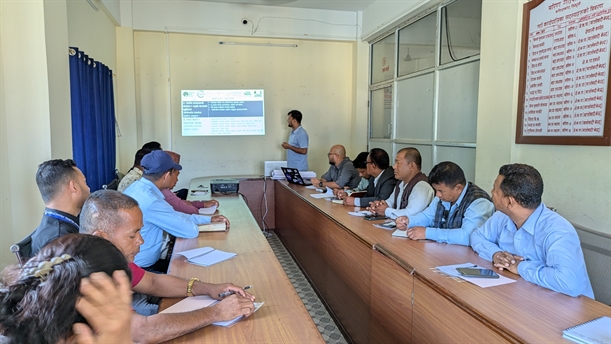
In May 2025, the BAGAR project conducted a comprehensive analysis to validate its targeted interventions and develop a robust assessment methodology. Stakeholder analysis workshops engaged municipal leaders, department heads, and representatives from community-based organizations to ensure interventions aligned with local needs. These were complemented by 10 Key Informant Interviews (KIIs) with representatives from the Division Forest Office and local NGOs, providing critical insights into governance and ecosystem dynamics. Simultaneously, the project designed a multi-dimensional methodology to assess the impact of agroforestry on flood mitigation and fodder production. This approach integrated desk reviews, field observations, stakeholder consultations, and community discussions with both adopters and non-adopters, with a strong emphasis on incorporating local biodiversity knowledge and traditional ecological practices. The resulting methodology ensures that interventions are evidence-based, context-specific, and grounded in community realities.
