
Government Partnership & Private Sector Engagement
Government Partnership & Private Sector Engagement
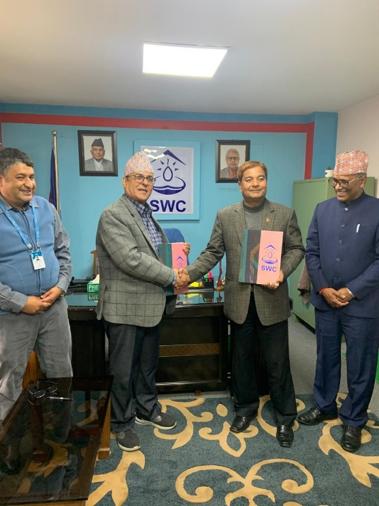
Heifer Nepal’s partnership model is based on a facilitative, market-systems approach that brings together government agencies, private sector actors, financial institutions, farmer organizations, and development partners to create sustainable and scalable agricultural development. Rather than focusing solely on direct implementation, Heifer serves as a catalyst by aligning incentives, strengthening institutions, and fostering collaboration across the agricultural ecosystem. The organization recognizes that lasting transformation requires coordinated action throughout entire value chains. To achieve this, Heifer works closely with local, provincial, and federal governments to integrate inclusive and climate-resilient agricultural practices into public policies and programs. Through co-investment and cost-sharing arrangements, these partnerships mobilize public resources, strengthen local ownership, and help institutionalize successful approaches within government systems.
In addition to government collaboration, Heifer actively engages private sector companies as co-investors and market integrators. These partnerships promote inclusive business models that improve market access, strengthen supply chains, and increase value addition, enabling smallholder farmers to participate more effectively in profitable and fair markets. A central component of Heifer’s approach is strengthening farmer organizations and cooperatives so they can operate as credible and bankable institutions. Working with financial institutions, Heifer expands access to tailored financial services, blended finance opportunities, and risk-sharing mechanisms, while also building farmers’ financial and business management skills to support enterprise growth and access to capital.

Heifer Nepal further promotes public-private-producer partnerships (4Ps) to support the development of critical rural infrastructure, including milk collection centers, cold storage facilities, processing units, and service hubs. These investments help address systemic constraints and create an enabling environment for efficient and inclusive value chains. Across all partnerships, Heifer emphasizes co-creation, adaptive management, and evidence-based innovation. By collaborating with research institutions, development organizations, and government stakeholders, it strengthens knowledge systems, encourages continuous learning, and ensures alignment with national priorities for agricultural transformation and financial inclusion.
Through this integrated partnership model, Heifer Nepal contributes to building resilient and inclusive food systems in which smallholder farmers—particularly women, youth, and marginalized communities—are empowered as entrepreneurs and decision-makers. The approach not only improves livelihoods and economic opportunities in the short term but also establishes the foundation for long-term, locally led agricultural transformation and sustainable rural development.
