
Innovative Initiatives in Action
Farmers Business School (FBS):
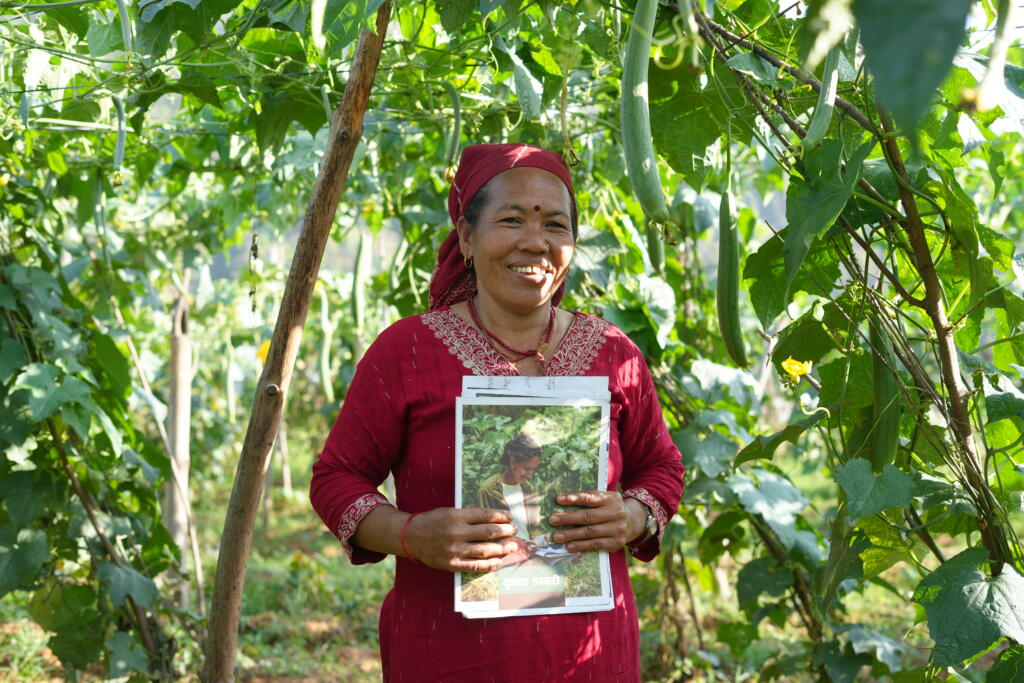
Farmers at the Farmers’ Business School skillfully learn the art of staking climbing crops to improve growth and sustainability.
Vegetable farming is a major source of income for smallholder farmers in Nepal. However, many face challenges beyond production, particularly in business planning, marketing, and market linkages. To address these gaps, Heifer International, through the Innovations in Agriculture and Livestock Value Chains Development (IALVC) project, introduced the Farmers Business School (FBS), a five-month, hands-on learning program that integrates entrepreneurship with climate-smart production practices. The IALVC project aims to strengthen goat, vegetable, and dairy value chains, supporting 163,418 smallholder farmers to increase productivity and achieve sustainable living incomes.
Traditional training programs focused mainly on production techniques, often delivered in short, ad hoc sessions. These overlooked critical areas such as motivation, entrepreneurship, market-led production planning, and post-harvest management. As a result, many farmers struggled to access proper markets, limiting their income and discouraging continued vegetable production.
The Farmers Business School bridges this gap through a comprehensive capacity-building package that combines entrepreneurship, market-oriented planning, technical training, and post-harvest handling. The program runs for five months across the full vegetable production cycle, with 13 sessions held every 2, 7, or 15 days depending on crop stages. Each four-hour session blends theory with practical learning. The first month focuses on business mindset and planning, the next three months on climate-smart production technologies aligned with the Caring for the Earth (C4E) principles, and the final month on marketing and farm business analysis.
Each FBS includes a demonstration plot, serving as a live classroom for hands-on learning and technology transfer to other community farmers. Participants are members of vegetable producer groups, including farmers cultivating at least 2 ropani (about 1,017 sq. meters) of land or smallholders committed to year-round vegetable production. FBS sessions are divided into business skills sessions covering entrepreneurship, market-led planning, and financial literacy and technical sessions focused on climate-smart practices and environmental stewardship. Through this approach, farmers learn to manage their farms as businesses, improve productivity, access better markets, and adopt sustainable, environmentally responsible farming practices.
Impact So Far
- Market-led production planning, including the development of market-based vegetable crop calendars.
- Demonstrations of improved and climate-smart production technologies.
- Adoption of climate-smart agriculture practices that promote environmental stewardship and sustainable food systems.
- Increased productivity and product quality, accompanied by reduced production costs.
- Enhanced entrepreneurship skills among smallholder farmers.
FBS FY25 Data Overview
- Total number of participants who completed FBS training: 5,004
- Total number of participants currently undergoing FBS training: 366
- Total number of completed FBS events: 199
- Total number of ongoing FBS events: 16
Farm Enterprise Accelerator Initiative
Rethinking Agricultural Development in Dhading - Farmers to Agripreneurs
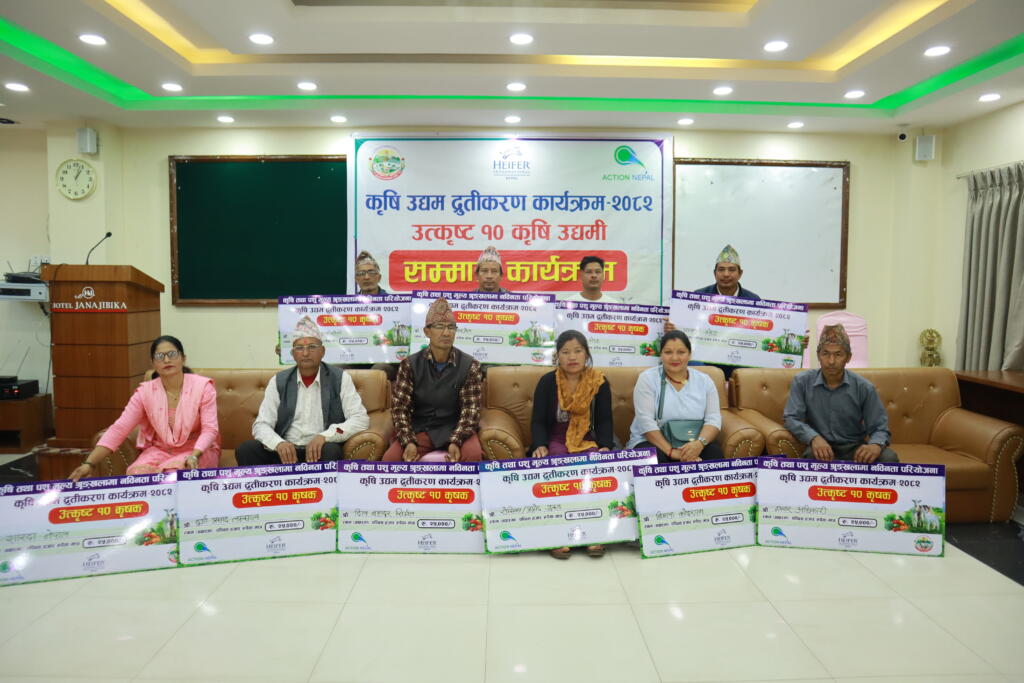
Popular platforms like Nepal/Indian Idol celebrate artists and give them recognition and respect. This inspired us to reflect: why can’t we build a similar culture of recognition for agriculture, which remains the backbone of our national economy and deeply shapes our socio-economic reality? In a country of around 3 crore people, where nearly 40% are youth and 60-70% depend on agriculture for their livelihoods, agriculture continues to sustain the nation. Yet the question remains: have we truly given it the recognition, respect, and central focus it deserves?
At a time when many young people are seeking opportunities abroad, we must also ask whether agriculture can become a viable and attractive pathway for them to return and build their future at home. This is the vision we are working toward.
However, recognition alone is not enough. Farmers must be empowered to become true entrepreneurs, equipped not just with subsidies, but with skills, confidence, and training to build their own enterprises and improve their economic and social wellbeing. By connecting them to markets and focusing on profitability, we aim to strengthen their capacity to contribute meaningfully to national development.
This is not a journey any single organization can achieve alone. It requires collaboration between the private sector, knowledge institutions, financial institutions, and development partners, with farmers at the center. We are encouraged by the strong commitment shown by all stakeholders in making this vision practical and impactful.
Moving forward, our goal is to refine and scale this approach, creating a system where farmers are recognized, empowered, and inspired to lead agricultural transformation.”
- Tara Panthi, Innovation & New Initiative Lead Context: A Shift in Agricultural Development
For decades, smallholder development programs have primarily focused on increasing production and productivity. While this has contributed to improved yields, it has often fallen short of ensuring that farmers can translate those gains into sustainable income, resilience, and long-term prosperity.
The Farm Enterprise Accelerator in Dhading represents a clear shift from this conventional approach. Rather than focusing only on production, it emphasizes the development of market-oriented farm enterprises, positioning farmers not just as producers, but as entrepreneurs driving their own growth.
Grounded in Heifer Nepal’s evolving program model centered on systems, markets, and farmer agency, the initiative is being implemented in Nilkantha Municipality and Siddhalek Rural Municipality in partnership with local governments, with technical support from Heifer International Nepal and facilitation by Action Nepal.
Unlike traditional training programs, the Accelerator is designed to be time-bound and results-oriented, aimed at fast-tracking enterprise development within a structured and practical framework. Farmers are supported to develop and refine business plans, expand production in line with market demand, adopt climate-smart agriculture practices, strengthen market linkages, and manage finances and business records. At its core, the program promotes entrepreneurial agency, encouraging farmers to think and act as business owners capable of innovation, differentiation, and scale.
The program began with over 1,500 farmers who had participated in Heifer’s Farmer Business School (FBS), gaining foundational knowledge in climate-smart agriculture, safe food production, and basic business literacy. From this group, 60 farmers were selected based on production capacity, entrepreneurial potential, and social capability. This was further refined to 25 high-potential farmers entering the acceleration phase.
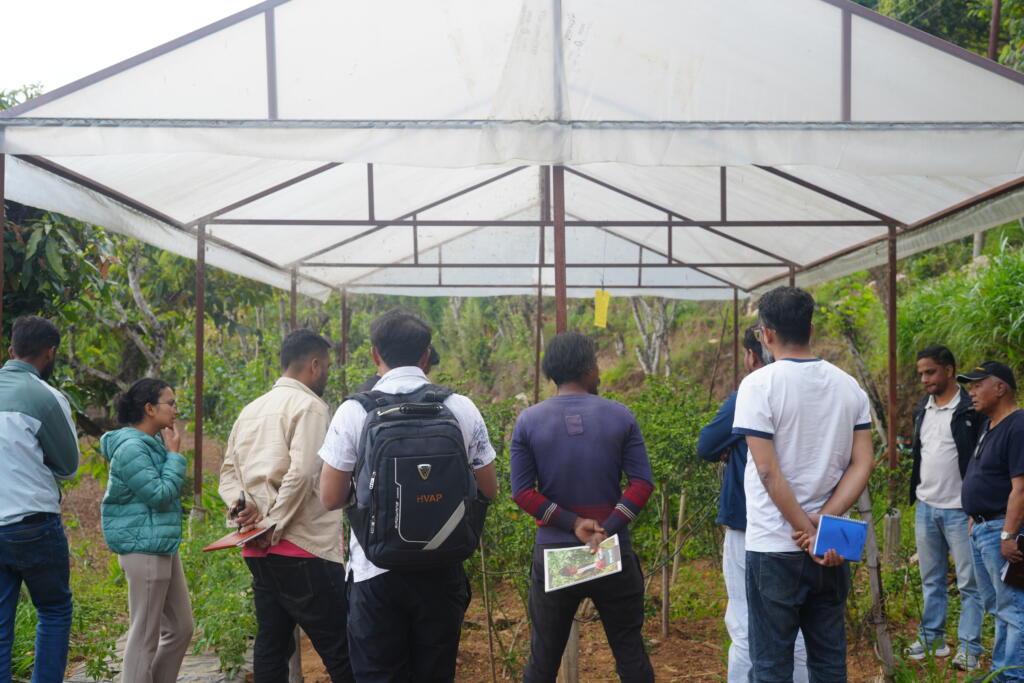
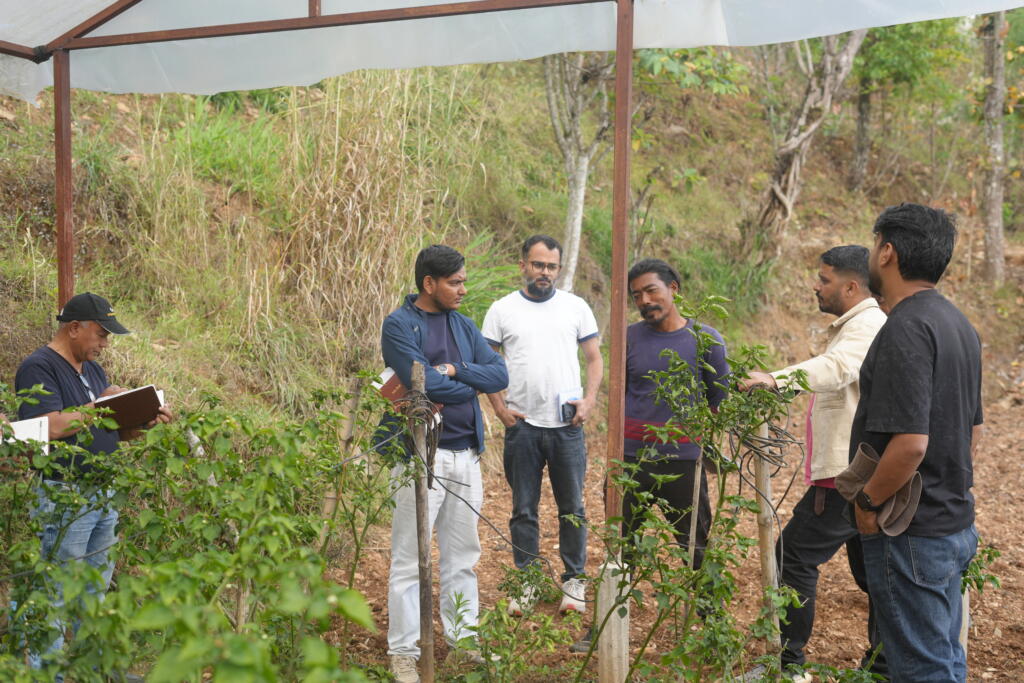
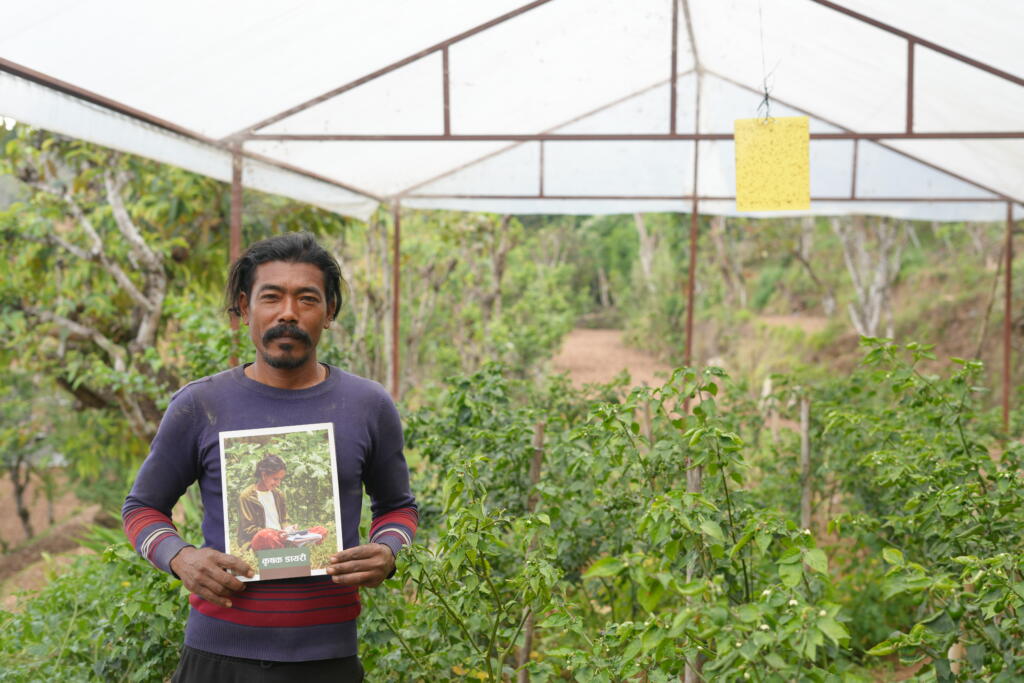
From 7th to 9th April, over a three-day period, the jury comprising representatives from Heifer Nepal, Kathmandu University, Global IME Bank, and Nilkantha Municipality (local government) visited the households of the 25 selected farmers to observe their farms firsthand, understand their enterprise journeys, and closely assess their progress, challenges, and potential. This field-based evaluation grounded the selection process in real-world realities and provided a deeper understanding of each farmer’s readiness to grow as an agripreneur within the acceleration pathway. Following these visits and deliberations, the jury finalized the selection of the top 10 farmers. On April 10, the process reached a key milestone with this selection, and each of the top 10 farmers was awarded an NPR 25,000 grant to further strengthen their enterprises. This selection is not merely a filtering process, but an intentional investment in farmers ready to transition beyond subsistence farming into entrepreneurship and to build sustainable, market-driven enterprises that can generate long-term income, resilience, and growth.
How Farmers Are Evaluated:
Farmers in the program are assessed through the M.A.I.R framework:
- Motivation: The level of drive, commitment, and willingness demonstrated by farmers to grow, adapt, and succeed as entrepreneurs.
- Ability: The practical skills, knowledge, and capacity of farmers to effectively manage and expand their agricultural enterprises.
- Innovation: The uniqueness and viability of their business ideas, including how they plan to innovate and differentiate themselves in the market.
- Resources: The availability and strategic use of resources; such as land, finance, networks, and technology and their plans to mobilize additional resources to achieve their growth ambitions.
This is complemented by community voting, ensuring transparency, local validation, and stronger engagement.
Together, these mechanisms reinforce a central idea: transforming farmers into entrepreneurs through structured support, accountability, and opportunity.
Farmer Voice:
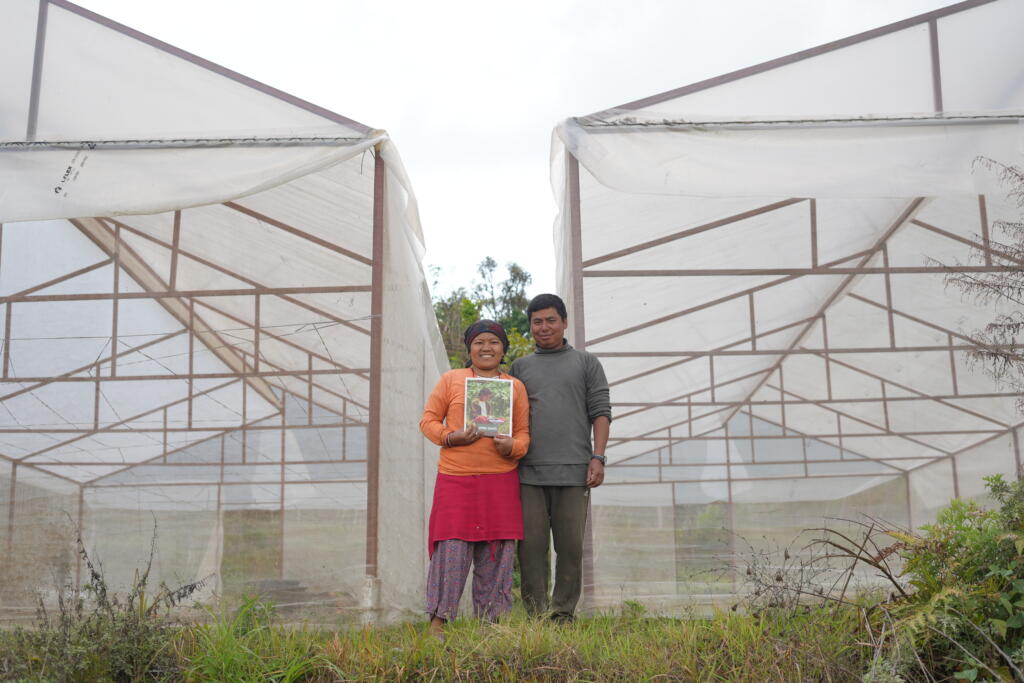
Roshika Gurung, one of the 10 selected farmers shared:“I feel very happy and fortunate to be selected among the top 10 participants after completing the Farmers Business School (FBS) training. The program has given me valuable knowledge that I continue to apply in my farming. I have adopted organic practices and started selling directly in the market instead of relying on middlemen, which has improved both my income and confidence. I am now determined to build my future as an agricultural entrepreneur.”
Building an Ecosystem Around Farmers
A defining strength of the Accelerator is its ecosystem approach. Farmers are connected to a wider network of stakeholders including local governments, financial institutions, private sector actors, universities, and cooperatives.
The initiative also strengthens the ecosystem through:
- Growth grants for high-performing farmers
- Digital tools for business planning and record-keeping
- Mentorship and technical advisory support
- Linkages with banks, markets, and private sector actors
This reflects a broader shift from implementation to facilitation, positioning Heifer as a catalyst of systemic change.
Training to Transformation
Within a short period, visible changes are already emerging. Farmers are expanding production, adopting improved technologies, improving record-keeping, and aligning production with market demand. More importantly, a mindset shift is underway, from subsistence thinking to enterprise thinking, where farmers increasingly focus on costs, returns, customers, and long-term growth.
A Farmer’s Reflection
Buddhi Prasad Burlakoti shared:
“True success is not just about personal gain, selection, or incentives. Real progress happens when we grow together and uplift others along the way. If we apply what we have learned and train fellow farmers in our community, that is when genuine development takes place.
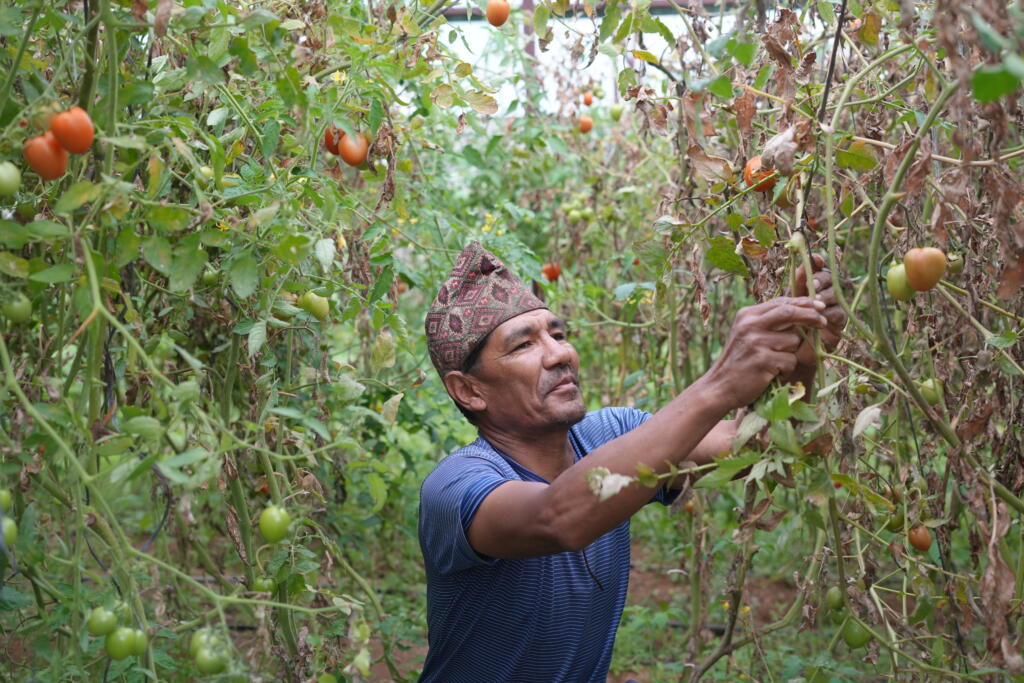
I myself worked abroad before returning home and starting small. With support such as tunnel farming grants, I have now expanded to 7-8 tunnels and am successfully growing tomatoes. Guided by facilitators, I strongly believe we must help others move forward as well. In many villages, knowledge is often withheld out of fear that others may progress faster, but this mindset needs to change, growth should be shared, not limited. I am grateful to Heifer and Action Nepal for their support. By linking agriculture with entrepreneurship, this initiative shows that farming can improve both family livelihoods and the wider community. I hope such programs are expanded across the country.”
Why This Matters
The Accelerator addresses a key gap in traditional development: the assumption that increased production alone leads to prosperity. Without access to markets, finance, and enterprise skills, productivity gains often do not translate into sustained livelihoods.
This model instead promotes entrepreneurship over dependency, strengthens systems rather than isolated interventions, and positions farmers as active drivers of economic growth.
Pilot to Possibility
The Dhading Farm Enterprise Accelerator is more than a pilot, it is a proof of concept for a new way of thinking about agricultural development. It demonstrates that when farmers are provided with the right tools, networks, and opportunities, they can move beyond subsistence farming to build viable and thriving enterprises.
In a context where many young people seek opportunities abroad, this model offers a powerful alternative, positioning agriculture not just as a livelihood, but as a respected, profitable, and aspirational career path.
The Final Phase: Pitching for Growth
In the final phase of the accelerator journey, participants received training in business communication and presentation skills, enabling them to confidently share their stories and business ideas with students at schools and colleges. These interactions generated strong interest and engagement among youth around agriculture and entrepreneurship. On 17 June 2026, the 10 selected agricultural entrepreneurs presented their progress, showcasing their business potential, production capacity, market strategies, and investment needs in a professional pitching session. Three entrepreneurs were selected for further support to strengthen and scale their agribusinesses, marking an important milestone in the initiative.
The selected farmer couples are:
• Roshika Gurung & Pramod Gurung
• Ram Kumar Shrestha & Yub Kumari Shrestha
• Buddhi Prasad Burlakoti & Krishna Kumari Burlakoti
In addition, Bimala Koirala & Purna Prasad Koirala were recognized for their strong potential. All four couples received a grant of NPR 50,000 to support their enterprise development.
This milestone represents not an end, but the beginning of a new phase of growth. It highlights the importance of broader stakeholder collaboration to expand and strengthen the model. The key learning is clear: agricultural transformation requires more than financial and technical support; it also depends on motivation, recognition, confidence, and an entrepreneurial mindset.
A Farmer’s Reflection
Sharing his experience, Buddhi Prasad Burlakoti said: “True success is not only about personal gain, selection, or incentives. Real progress happens when we grow together and uplift others along the way. When we apply what we have learned and share our knowledge with fellow farmers, that is when meaningful development takes place. I worked abroad before returning home and starting small. With support such as tunnel farming grants, I have expanded to 7-8 tunnels and am now successfully producing tomatoes. With guidance from facilitators, I believe we have a responsibility to help others move forward as well.
In many communities, knowledge is sometimes kept to oneself because of the fear that others may progress faster. This mindset needs to change, growth should be shared, not limited. I am grateful to Heifer and Action Nepal for their support. By connecting agriculture with entrepreneurship, this initiative shows that farming can improve both family livelihoods and the wider community. I hope similar programs expand across the country.”
Why This Matters
The Accelerator addresses a critical gap in traditional agricultural development: the assumption that increased production alone leads to improved livelihoods. Without access to markets, finance, business skills, and entrepreneurial support, productivity gains often fail to translate into sustainable income opportunities. This model promotes entrepreneurship over dependency, strengthens local systems, and positions farmers as active contributors to economic growth.
Pilot to Possibility
The Dhading Farm Enterprise Accelerator is more than a pilot, it is a demonstration of a new approach to agricultural development. It shows that when farmers have access to the right tools, networks, knowledge, and opportunities, they can move beyond subsistence farming and build successful, sustainable enterprises. At a time when many young people seek opportunities abroad, this model presents agriculture as more than a traditional livelihood. It positions farming as a respected, profitable, and aspirational career pathway for the next generation.
