– By Krishna Dev Joshi
On World Environment Day, June 5, 2026, Heifer Nepal took climate action beyond conference halls, banners and formal speeches though BAGAR Project. It brought the message to the streets where communities live, farm, struggle, adapt and hope.
Observed every year on June 5, World Environment Day is a global reminder that the climate crisis is no longer a distant threat. It is already shaping the daily lives of smallholder farmers, livestock holders and riverine communities. In 2026, the official United Nations theme “Climate Action” and the global campaign slogan “Inspired by Nature. For Climate. For Our Future.” called on the world to act with urgency, reduce emissions, strengthen adaptation and embrace nature-based solutions.
Heifer Nepal responded to this call in a creative and deeply community-centered way. Through street drama, storytelling and digital learning videos, Heifer transformed World Environment Day into a living conversation about climate resilience, floodplain restoration, agroforestry and the power of communities to shape a safer future.
A Celebration Rooted in People and Place
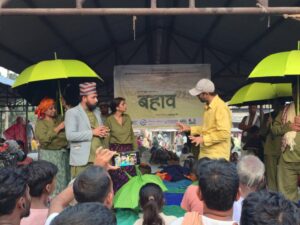
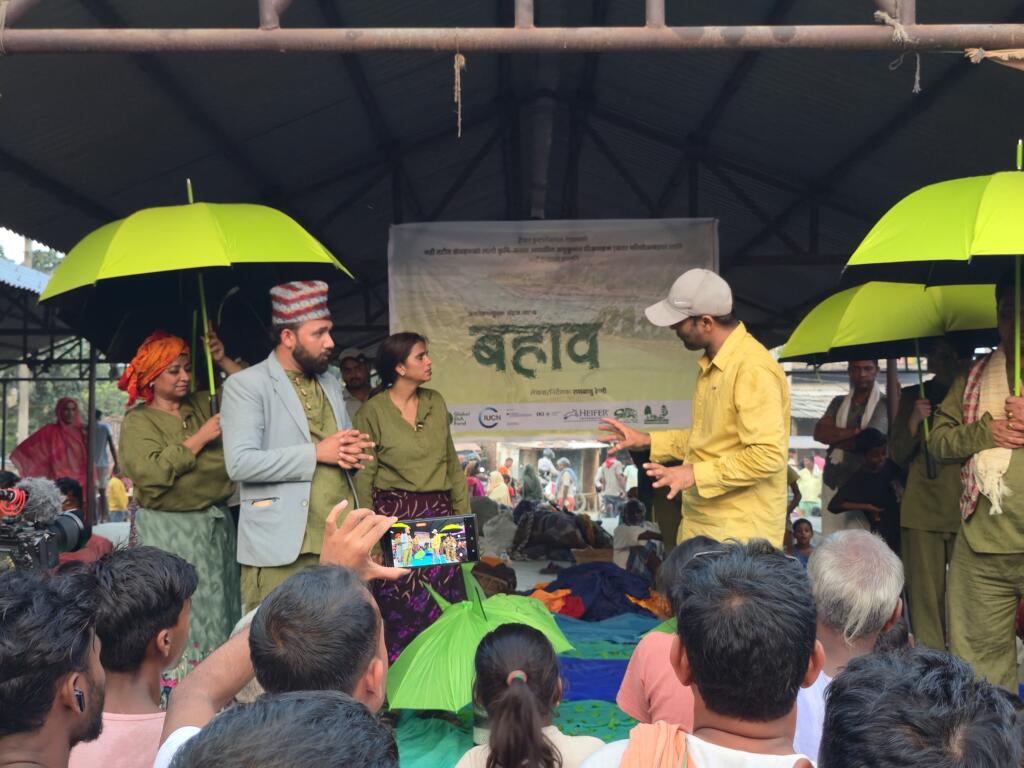
As part of the BAGAR Project, Heifer organized street drama performances in climate-vulnerable areas of Nepal i.e. Gadhimai Municipality, Rautahat and Marin Rural Municipality, Sindhuli on June 3,4 and 5 2026, marking World Environment Day with energy, creativity and purpose.
This was not a typical awareness event. Instead of asking communities to come to a formal venue, Heifer brought climate education directly to them. The streets became the stage and local people became the audience, participants and messengers. The language was simple, the emotions were real and the message was powerful: climate action must begin where climate impacts are felt most
BAHAW: A Story of Rivers, Smallholder Farmers and a Changing Climate
At the heart of the celebration was a street drama titled “BAHAW”, meaning flow. The performance captured the changing relationship between communities and rivers in the face of climate change.
Through compelling characters, songs, humor, emotion and audience interaction, the drama portrayed the realities faced by riverbank communities: floods, droughts, river erosion, pollution, loss of fertile land, declining food production and reduced availability of grass and fodder for livestock.
The story followed farmers living near the Bagmati River, where once-productive farmland has gradually turned into barren floodplain areas. Repeated flooding, riverbank cutting, unmanaged waste and weak land conservation practices have placed both livelihoods and ecosystems under pressure.
But the drama did more than highlight problems. It opened a conversation about solutions.
Looking Beyond Concrete Walls
One of the strongest messages of the performance was that concrete embankments alone cannot solve the complex challenges of recurring floods, erosion and land degradation. Communities need long-term solutions that work with nature, not against it.
Through the drama, Heifer promoted ecosystem-based adaptation (EbA) as a practical, sustainable and community-led approach. The performance showed how agroforestry, riverbank plantation, soil conservation, floodplain restoration and local land-use planning can help strengthen fragile landscapes while supporting agriculture and livestock.
These nature-based solutions can help protect soil, slow the flow of floodwater, reduce risk, restore degraded land and improve the availability of food and fodder. In other words, they protect not only the environment but also the everyday livelihoods of families who depend on land, water, crops and animals.
From Street Drama to Digital Storytelling
To extend the message beyond the performance sites, Heifer also released four awareness videos on key climate adaptation topics:
Through the drama, Heifer promoted ecosystem-based adaptation (EbA) as a practical, sustainable and community-led approach. The performance showed how agroforestry, riverbank plantation, soil conservation, floodplain restoration and local land-use planning can help strengthen fragile landscapes while supporting agriculture and livestock.
These nature-based solutions can help protect soil, slow the flow of floodwater, reduce risk, restore degraded land and improve the availability of food and fodder. In other words, they protect not only the environment but also the everyday livelihoods of families who depend on land, water, crops and animals.
What is EbA in Floodplains?
Climate Risks and Vulnerabilities
Local Adaptation Practices
Community Resilience and Agroforestry
For Climate, For Communities, For Our Future
Heifer’s World Environment Day 2026 celebration was unique because it turned awareness into experience. It did not simply tell people that climate change is a challenge; it showed how climate change affects the entire food system and livelihoods of smallholder farmers.
The message of Heifer’s celebration echoed the global call of World Environment Day 2026: “Inspired by Nature. For Climate. For Our Future.”
By bringing this message to the streets of Gadhimai and Marin, Heifer Nepal showed that climate action can be creative, inclusive and deeply connected to people’s everyday realities. The celebration reminded everyone that restoring floodplains, protecting rivers, promoting agroforestry and strengthening local adaptation are not optional actions-they are essential investments in the future.
Because when nature is protected, communities are protected and when communities are inspired, climate action begins to flow.