International Year of the Woman Farmer (2026)
The year 2026 marks a defining moment for global agriculture and gender equality. Declared by the United Nations, the International Year of the Woman Farmer (IYWF 2026) shines a long-overdue spotlight on the millions of women who sustain agrifood systems across the world. From cultivating crops and raising livestock to processing, trading, and preserving food traditions, women are at the heart of food security, nutrition, and rural economies, yet their contributions have too often remained unseen and undervalued.
Across continents, women farmers play diverse and indispensable roles. They are smallholder farmers, pastoralists, fishers, laborers, entrepreneurs, and knowledge holders who nurture not only crops and livestock, but also families, communities, and local economies. Despite this, systemic barriers such as limited access to land ownership, financial services, education, technology, and decision-making spaces continue to constrain their full potential. IYWF 2026 is both a recognition of these realities and a global call to action to address them.
Celebrating this year is not symbolic, it is essential. Elevating women farmers strengthens entire food systems. When women have equal access to resources and opportunities, agricultural productivity rises, household incomes improve, and communities become more resilient to climate change and economic instability. Advancing gender equality in agriculture is therefore not only a matter of justice, but also a practical pathway toward achieving the Sustainable Development Goals and building inclusive, sustainable futures.
This vision closely aligns with the mission of Heifer International and its evolving program model, which places women at the center of transformation. Throughout 2026, Heifer will amplify the voices of women farmers as innovators, leaders, and entrepreneurs shaping the future of food systems. Through initiatives like the “She Has a Story to Tell” campaign, the focus shifts from speaking about women to listening to them, creating space for their lived experiences, insights, and aspirations to guide change.
At its core, IYWF 2026 asks a powerful question: Are we truly listening? Listening means recognizing women not just as beneficiaries, but as decision-makers and drivers of progress. It requires investing in their potential, removing systemic barriers, and ensuring their voices influence policies, markets, and innovations.
Globally, the message is clear: women feed the world, yet too often they are excluded from the decisions that shape how food is grown, distributed, and valued. This is more than inequality, it is a missed opportunity that limits the potential of entire food systems. When women lead, food systems become more productive, resilient, and inclusive. From seed to sale, women are ready to guide the future of agriculture as producers, innovators, entrepreneurs, and stewards of ecosystems.
In Nepal, this global reality comes into sharp focus. Women farmers nourish families, sustain rural economies, and protect fragile environments, yet their contributions often remain overlooked in policy and public discourse. Across the country, women are shaping the future of agriculture in practical and transformative ways leading cooperatives, building enterprises, and pioneering climate-resilient practices such as composting, biofertilizers, and improved water management technologies. Their leadership across dairy, vegetables, honey, poultry, and livestock value chains strengthens local markets, connects smallholder farmers, and creates sustainable livelihoods grounded in ecological balance and cultural identity.
At the same time, their lived realities reflect both resilience and challenge. Experiences range from stories of innovation and leadership to those of hardship, such as mothers striving to provide daily meals while struggling to access nutritious food for their children. These realities underscore deeper gaps within food systems and the urgency of sustained, collective action.
Agriculture remains central to Nepal’s economy, yet most farmers operate on small and fragmented landholdings, often with limited returns. Despite feeding the nation, farmers frequently lack recognition and adequate support. Without farmers, there is no food system and without engaging the next generation, the future of food security itself is at risk.
Women farmers, in particular, continue to face structural barriers, including limited access to land, finance, education, mobility, and decision-making power. Closing these gaps could significantly increase agricultural productivity, highlighting both the economic and social importance of gender equality in agriculture.
At Heifer, women are placed at the center of change. By strengthening self-confidence, building technical skills, and organizing women into cooperatives, their voices grow stronger within households, markets, and communities. When women gain economic independence, their influence expands benefiting not only their families but entire local economies.
However, lasting progress requires more than grassroots action. It depends on supportive policies, effective implementation, and long-term thinking around soil health, market systems, and sustainability. Creating an enabling environment for smallholder farmers, especially women is critical to unlocking Nepal’s agricultural potential.
#IYWF2026 #YearOfTheWomanFarmer
Consumers, too, have a role to play. The choices we make about what we eat shape demand, influence production, and ultimately affect farmers’ livelihoods. Building a deeper connection with the people behind our food and recognizing their dignity and contribution is essential.
Agriculture holds immense promise for Nepal. Meaningful progress will come when farmers are valued, women are empowered as leaders, and the next generation sees agriculture not as a last resort, but as a vital and respected profession. The International Year of the Woman Farmer is an opportunity to move from recognition to action ensuring that women are not only feeding the world, but leading it.
Quotes from Farmers
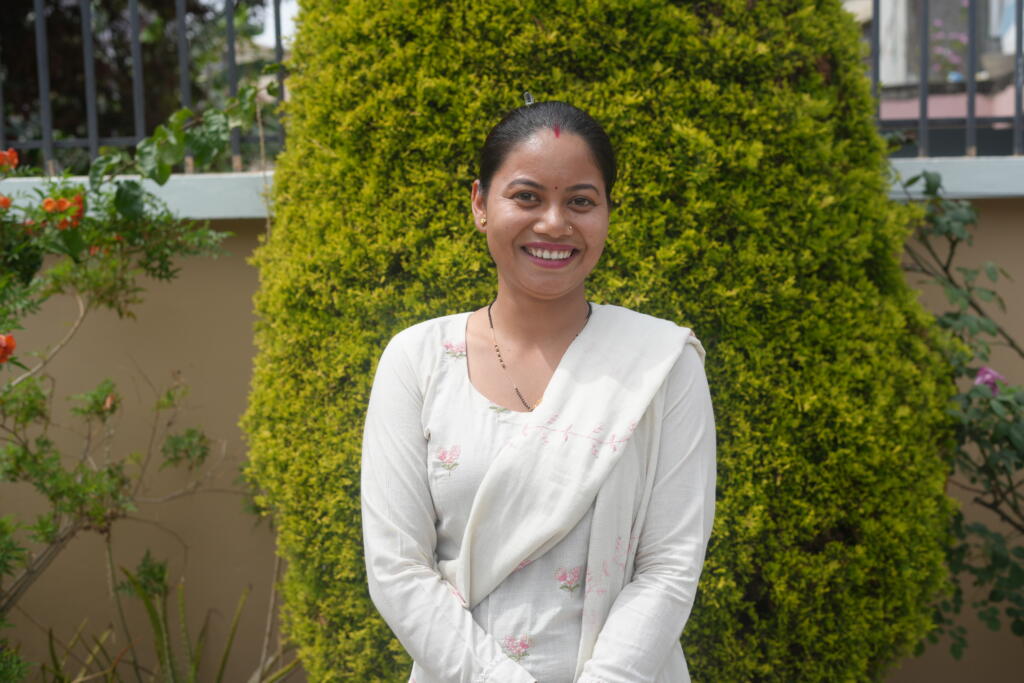
“I used to farm out of necessity, relying on chemicals without thinking about the future. Through the Koseli Women’s Group and Heifer Nepal, I’ve learned natural practices like Jholmal and biochar, and I’m starting to see changes in my soil. It’s still a journey, but learning alongside other women gives me confidence. For me, farming is now about caring for the earth and our future.”
- Nirmala Chaudhary (29) Farmer-Dang
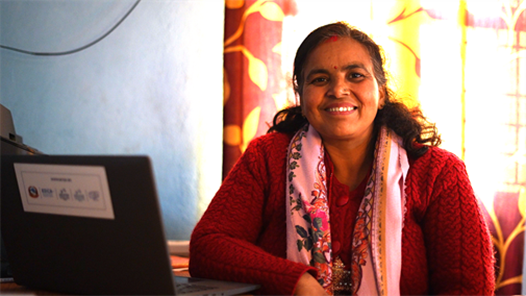
- “I grew up in a society where women rarely made financial decisions. When my husband became ill, I suddenly had to manage everything including family, expenses, and income. Joining the Gaiyadevi Self-help Group and Heifer Nepal’s Milky Way Program gave me skills to build my dairy work and confidence. Today, I take part in the cooperative, learn from other women, and I no longer feel invisible. I am finding my voice.”
Indira Pokhrel Farmer, Sindhuli
Rising from the Ashes
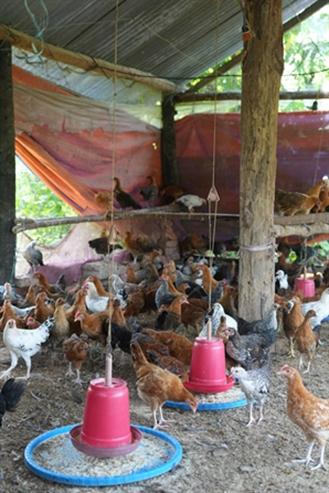
Khimisara Ale Magar poses with her baby chicks
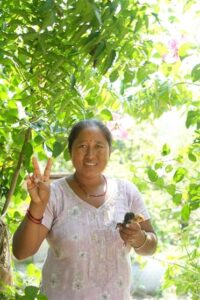
A few years ago, in the quiet village of Sitganga-8, Aghakhani, a devastating fire changed everything for Khimisara Ale Magar, a 39-year old farmer. A sudden electrical short-circuit sparked a fire that quickly engulfed her chicken sheds, and in a moment of paralyzing fear, she ran, unable to save even a single chicken. What had once been a well-established farm was reduced to ashes and twisted metal. That night, 300 chickens died, and with them, Khimisara’s confidence, dreams, and the results of years of hard work died too. The fire didn’t just destroy her sheds; it shattered her spirit. The loss was unbearable. Her hard-earned investment, her tireless efforts, and her hopes for a better future were gone in an instant. But what hurt the most was the guilt; she couldn’t save them. The trauma left her numb, and for months, she gave up completely.
“Maybe poultry farming isn’t for me”, she told herself quietly.
She began to believe she wasn’t capable, that perhaps she had been wrong to dream at all. With no chickens and no farm left, she relied on her goat farm, the support of her husband, and the fading echo of a dream she no longer had the strength to chase. She also worked as a laborer to cover household expenses and keep things afloat.
But everything changed when Heifer International came into her village and into her life. Unlike other organizations, the Heifer team didn’t just back her with money, they brought compassion, understanding, and a belief in her that she had lost. They saw strength in Khimisara when all she saw was failure. With their encouragement and support, she slowly began to rebuild her confidence. She joined the Jaluke Social Entrepreneur Women’s Cooperative in Arghakhanchi, and the Heifer staff became her steady source of hope when she felt like giving up. They stood by her side every step of the way, gently urging her to rebuild not just her chicken farm, but her life. And most importantly, they helped her rediscover the belief in herself that she thought was gone forever.
In 2076, with renewed courage and support from Heifer’s Access to Finance initiative, Khimisara took a subsidized agricultural loan of NPR 4 lakhs – USD 2635 (out of the 5 lakhs she requested) from ADBL Bank in Thada, along with six other villagers, at just 1% interest. The loan, received in two installments, allowed her to rebuild what she had lost. She used NPR 1,65,000 (USD 1087) for the renovation of her chicken and goat sheds and used the rest to buy 400 chickens and restart goat farming. But this time, she had the knowledge, the training, and most importantly, the belief to grow. She paid back the loan consistently, NPR 1,000 (USD 6) every month and NPR 80,000 (USD 527) annually and by Baisakh 2082, she had fully repaid the loan, along with the 1% interest, without ever feeling burdened, because for the first time, she was earning enough to sustain both her family and her dreams. What had once burned to ashes had now grown into a self-sustaining farm and the woman who once ran from the fire had risen from it, stronger than ever.
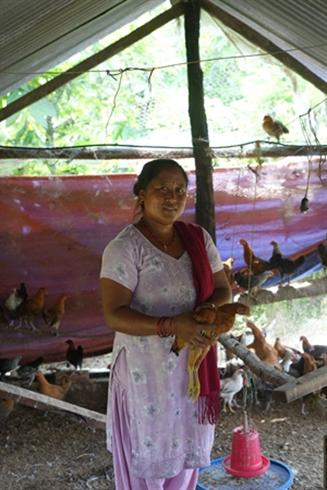
Khimisara’s farm has grown and diversified impressively over the years. Starting with 400 chickens, Khimisara eventually expanded her flock to 1,000, sold them, and now maintains around 200 local chickens, which she sells for NPR 1,200 (USD 8) to 1,300 (USD 8.5) per 2 kilograms. Thanks to the training she received from Heifer, she now vaccinates her animals regularly to keep them healthy. Beyond poultry, her farm includes 16 goats; eight males, four females, and two kids that she sells for NPR 560 (USD 3.7) per kilogram. She also owns a buffalo that produces five liters of milk daily, from which she makes ghee that sells for NPR 1,400 (USD 9) per kilogram. Additionally, she raises three large black pigs, selling them at NPR 400 (USD 2.6) per kilogram. One pig can weigh up to 70-80 kgs. Her vegetable farm is abundant with mustard, cauliflower, radish, beans, tomatoes, lentils, maize, wheat, and she even produces mustard oil from her own harvest. She rarely buys food from outside, except for meat and fish, saying with a shy smile, “I feel bad eating the meat from my own farm.” She also sells her vegetables at the Bhalubang market and recently purchased an auto-rickshaw with a NPR 1 lakh (USD 659) loan from her cooperative, earning between NPR 1,000 (USD 6.6) and 1,200 (USD 8) daily from this new venture.
Khimisara is currently the only woman in her entire village running a poultry farm. Her husband, who once worked as a cook in India, came back home when she decided to restart the business. Today, they run the farm side by side. “Before, he was a cook, now he’s his own boss and runs the farms” she says with a proud smile. Gone are the days when Khimisara was just a housewife asking for money; now, she is the family’s provider, standing strong on her own two feet. Beyond farming, she has taken on a leadership role as a member of the Public Accounts Committee (Lekha Samiti) in her cooperative. Her family: her husband, two daughters, and in-laws are her biggest supporters, encouraging her every step of the way, pushing her to attend meetings, learn more, and keep growing. Together, they’ve built not just a farm, but a future filled with hope and possibility.
Khimisara’s journey hasn’t been without its challenges. At one point, strong winds destroyed her pig shed, and she had to rebuild it from scratch. Though she dreams of expanding her business even further, she feels hesitant about taking another loan, as it would require putting her land up as collateral, a risk she’s still unsure about. Despite these concerns, her determination remains strong. She carefully considers her options while looking ahead, holding onto the hope that one day her farm and work will be recognized throughout her region and across the country.
Before Heifer’s intervention, caste and gender discrimination were deeply rooted in the village. Dalit communities like the Damai and Kami were openly shunned, people would avoid them, and they were treated as outcasts. One villager who married a Dalit was even barred from entering her own home for years. Women faced harsh restrictions too; they were often kept outside the house, especially during menstruation, and their voices were silenced. The village was trapped in old, painful customs that divided and hurt its people.
But everything began to change when Heifer came. They taught the villagers about equality, respect, and the importance of supporting one another. Slowly, walls that had stood for generations started to crumble. The villager who had been excluded was finally accepted back into her home. Women were no longer kept outside during their periods, and the community began to see them as equals. The change was not just in their attitudes but in the spirit of the village itself.
Before Heifer’s arrival, the village struggled with waste management. Trash was thrown everywhere, on roads, in rivers, and plastics were often burned, harming the environment. People only cleaned their own homes and didn’t understand the impact on the wider community. After Heifer’s training, the villagers learned the importance of keeping their surroundings clean. Now, three groups take turns cleaning the village every month, working together to keep their home safe and healthy. “Heifer really opened our eyes. Now, cleaning is something we encourage, not ignore” shared Khimisara and her mother-in-law.
Khimisara has received valuable training from Heifer in areas like poultry management, goat shed maintenance, savings, and business development. Unlike other trainings she had attended before, where she often struggled to understand and sometimes felt sleepy, the sessions with Heifer truly captured her attention and made her curious. She was fully engaged, eager to learn, and motivated to apply what she was taught.
Khimisara’s journey is a powerful reminder that hope can rise from the ashes of despair. What began as a heartbreaking loss, the fire that took her chickens and nearly crushed her spirit became the spark for a new beginning. With courage and support she rebuilt not just her farm but her confidence and her place in the community. Today, Khimisara is a symbol of resilience and change, a woman who turned her fears into fuel, breaking barriers. Her story is proof that with belief, support, and hard work, even the darkest moments can lead to brighter tomorrows.
“Farming used to feel uncertain, especially with my husband unwell and the responsibilities on me. Through Heifer’s Farmers Business School, I’ve started seeing farming as a business. Learning to plan, manage costs, and care for my soil has given me confidence and hope. With support, women like me can provide for our families and protect our land.”
- Dil Kumari Magar Farmer - Dhading